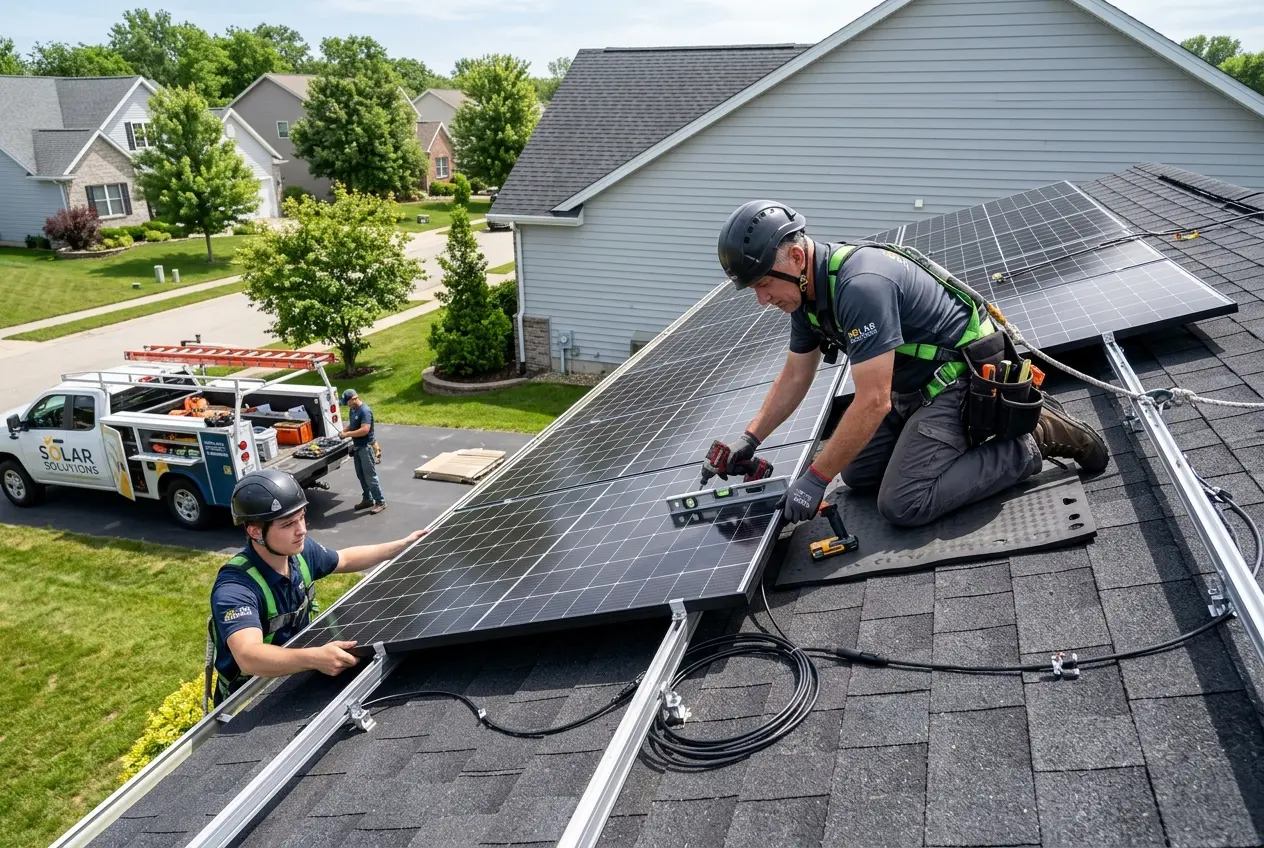
From Spanish-style homes in North Park to modern builds in Carmel Valley, our residential installations account for San Diego's varied architecture. We use LiDAR scans to model your roof's sun exposure across seasons, accounting for marine layer patterns that differ between coastal and inland neighborhoods.
All systems include critter guards to deter pigeons common in urban areas and wireless monitoring that alerts you to efficiency changes during Santa Ana wind events. For historic districts like Mission Hills, we offer low-profile mounting that meets preservation guidelines while delivering 90%+ of standard system output.
All systems include critter guards to deter pigeons common in urban areas and wireless monitoring that alerts you to efficiency changes during Santa Ana wind events. For historic districts like Mission Hills, we offer low-profile mounting that meets preservation guidelines while delivering 90%+ of standard system output.
Our Process
- 01 Step 1: 3D roof modeling using aerial imagery and solar path simulations
- 02 Step 2: Equipment selection based on your home's orientation and local weather patterns
- 03 Step 3: SDG&E interconnection paperwork handled by our permit team
- 04 Step 4: Installation by crews trained in seismic bracing requirements
Benefits
- 5% higher output with location-specific panel angling
- HOA approval assistance for restricted communities
- Seismic-rated racking exceeds California building codes
- 10-year production guarantee
Frequently Asked Questions
How does marine layer fog affect my system?
We position panels to maximize morning sun capture before fog rolls in, and use microinverters to prevent entire system drops during partial shading.